via UK Jazz News

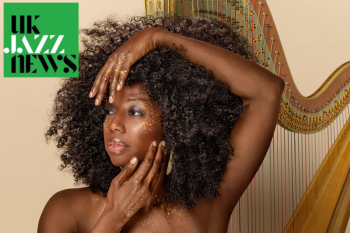
The following is jazz journalist Morgan Enos’s interview with harpist, composer, and bandleader Brandee Younger. Her new album, Gadabout Season, featuring bassist-producer Rashaan Carter and drummer Allan Mednard, as well as guests Shabaka, Courtney Bryan, Niia, and Josh Johnson, was released 13 June via Impulse!. Links to purchase the album, and to Younger’s website, can be found at the end of this article.

“If you can write a piece on how Verizon sucks, I will speak as eloquently as I can.”

So vents Brandee Younger, a Grammy-nominated leader on her instrument, who has just been catching signals from a far more profound plane. (This was at the top of our phone interview, a last-minute pivot from Zoom.)

On 16 May, Younger performed at ‘COSMIC MUSIC: The Celestial Songs of Alice Coltrane’, a Carnegie Hall tribute to her primary influence, alongside Coltrane’s children, Ravi and Michelle, Flying Lotus, and the Ai Anantam Devotional Ensemble.

And yet, despite the weight and charge of the moment, and with Gadabout Season just days from release, Younger is still preoccupied with a more terrestrial concern. “You’re talking to a machine for a long time, then they make you restart the router,” she relates. “Don’t you think I know how to do that on my own?”

Just like Coltrane, whose refurbished harp Younger played not only on this record, but on stage, Younger is a forward-thinking artist with a grounded, rational purview.

For one, she’s rolled her eyes at the idea of the harp being inherently ‘dreamy’ or ‘ethereal’. (Of course, it can be those things, but it’s capable of so much more.) Her freight-train charisma and humour undercut any received sanctimony around her art form, or Coltrane’s legacy.

Read on for a full interview with Younger about Gadabout Season.

UK Jazz News: How could most of us expand our understanding of the harp?

Brandee Younger: I think even for musicians who aren’t familiar with the harp, it’s important to understand that it’s a fully functional instrument. Our harp forefathers, like Marcel Grandjany and Carlos Salzedo, created arrangements of Bach violin pieces and piano works so we’d have a traditional, standard repertoire, just like any other instrument.

Our repertoire really does show the breadth of what we’re capable of. But outside our little harp circle, the world still tends to see a [clichéd] glissando. But the harp has all 12 notes, just like any other instrument. I think people just don’t hear it enough in that fully expressive way.

UKJN: Say more about that.

BY: When I was younger, I played a lot of weddings. I used to get hired because I could play pop tunes. It wasn’t that harps couldn’t play pop tunes – it’s just that harpists weren’t playing them. But we can do it. And once brides started to see that, they started sending some pretty outrageous setlists.

I wasn’t introduced to the harp through the usual route: I found it through Dorothy Ashby, by way of Pete Rock tracks. That’s not how most people think of the harp being used, in a hip-hop context.

Back in the ’70s, they had full orchestrations that used harp glissandos all the time. It wasn’t unusual. But somewhere along the way, with changes in music production and technology, the harp kind of got pushed aside and forgotten.

I feel like I’ve spent most of my harp life trying to make sure the harp is represented in spaces where people just aren’t used to hearing it. And that often includes music that isn’t ethereal.

UKJN: What else peeves you about the harp discourse, or its place in the musical ecosystem?

BY: I do get annoyed with very strict genre separations. Perfect example: in 2022, I released a digital single, a tune for solo harp called ‘Unrest’. That lives entirely in the jazz sector. Then in 2023, I recorded another piece, ‘Essence of Ruby’, with my trio. Same thing – jazz category.

Now let’s say a classical harpist records those same tunes. Where do they land? Probably under classical. And yet it’s literally the same piece, played the same way. So what gives? That’s the kind of thing that drives me crazy: the way we box things in. And yeah, I get it, you all – journalists, critics – need categories and descriptions. But it just sucks when the box is so, so, so tight, and there’s no holes in it.

UKJN: What did you think of the Alternative Jazz category addition at the Grammys?

BY: I think it’s great to have an Alternative Jazz category. I do think it’s a little strange when someone we all love as a hip-hop artist can just slide in after not really putting in work in that department. I know a lot of people are upset about that.

It’s confusing. If it’s alternative jazz, then yeah, it belongs there. But if the popularity came from hip-hop – I don’t know, it’s weird. I guess that’s the same problem country music people have with Beyoncé. I ain’t got the answers, Sway!

UKJN: What drew you to each of your collaborators on Gadabout Season?

BY: Courtney [Bryan] came to mind first because she’s not only an incredible composer, but also an incredible human being. We’ve worked together before, and no matter where we’re playing, it always turns into church. We both grew up in Black church, which is loud church.

The piece I wrote for her, ‘Surrender,’ is church, but not Black church. It’s more stoic, more still. When I was writing it, I had Benjamin Britten’s ‘A Ceremony of Carols’ in mind. That piece is traditionally performed with children’s choir and harp in a cathedral. Imagine the purity of that sound. That’s what I was aiming for with the tune, and Courtney fit the vibe perfectly.

Rashaan Carter, who co-produced the album, wrote ‘End Means’ with Shabaka in mind. I happened to be playing with Shabaka at the Blue Note that week, and I said, “Wanna come over? This one has your vibe all over it.” We didn’t know what it would become, but we told him, “Bring one of those 18 wooden flutes you’ve got, and let’s just see what happens.” It came out really, really cool.

Niia is an old friend, someone I’ve worked with for a long time. She sang on my very first recording, and again on Soul Awakening, my debut full-length from 2019. She was the only person I wanted on that song. The album just feels so personal. It’s like a year’s worth of diary entries put into music.

UKJN: Setting aside the historical and artistic significance for a moment – what does it feel like to hold Alice Coltrane’s harp?

BY: Obviously, it’s super special. I’ve actually played it, with her music. The first time was a few years ago at a Red Bull Music Academy tribute concert to Alice Coltrane in NYC, held at the Knockdown Center.

I can’t even put into words how it felt. I just remember thinking, Oh my God – and I’m playing the heck out of it, too. That concert was, without exaggeration, one of the most thrilling days of my life.

Fast forward to now: I had the harp refurbished and restored. It still has its original soundboard, but we replaced the neck and the base frame, because the neck starts to bend over time. It doesn’t change the sound the way replacing the soundboard would, but it does make a difference.

Because we recorded this album at home over a long period of time, I had the luxury of getting up every morning and practicing on this instrument until – cliché as it sounds – it became an extension of me. That can’t happen until you’ve had time with it. 

I was really able to find my voice on this harp. Every morning, before doing anything else, I’d play, even just warm-ups, scales, exercises. It gave me a chance to get reacquainted with it. It’s the biggest privilege to play this incredible instrument at this point in my life.
Brandee Younger on TKA

Read the Full Article

via The Wall Street Journal

On an exuberantly original new album, the singer and pianist reimagine jazz standards from Duke Ellington, George Gershwin and others.

The songs that constitute the Great American Songbook will bend, but they won’t break. This body of music is infinitely flexible. You can take a number by Duke Ellington or Cole Porter and reinterpret it—or twist it around until it’s barely recognizable—in a way I wouldn’t advise trying with a composition by Beethoven or even John Lennon.

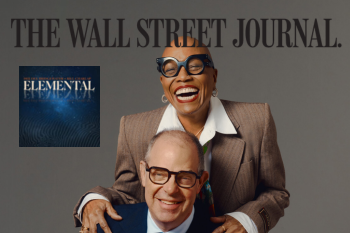
On their new album, “Elemental,” singer Dee Dee Bridgewater and pianist Bill Charlap push interpretation to its limits, starting with some very familiar jazz standards. Rather than digging down into their chord changes and devising new melodies on top of them, as has come to be the common practice in the modern jazz era, they create variations on the tunes as originally written.

On the album’s opening number, “Beginning to See the Light,” Ms. Bridgewater and Mr. Charlap do more than create a new version of that Duke Ellington classic, coming close to reinventing both the piano and even the human voice as an instrument. The first thing we hear is Ms. Bridgewater making some wordless noises with her mouth, followed by a few apparently random notes from both the bass and treble ends of Mr. Charlap’s keyboard. The two then lunge into Ellington’s music and Don George’s lyrics, first relentlessly stretching out phrases and then compressing them, as if they were made of musical Silly Putty.

Throughout the album, Ms. Bridgewater switches from one voice to another. On “See the Light” she shifts into a coy, little-girl tone, and at the end of the song she goes up into a soprano head voice, rather like an opera diva. At times on the album, Mr. Charlap sounds like a Harlem stride pianist circa 1930, while at others he could be a blues man from the Mississippi Delta. At some moments he goes for baroque.

That “Elemental” contains three numbers from the Ellington songbook—the others being “Mood Indigo” and “Caravan”— makes sense in that the composer continually tinkered with his own tunes. Sometimes he merely rearranged them, as with “Mood Indigo” on his 1966 “The Popular Duke Ellington.” And sometimes he reworked them from the ground up, as on the 1962 “Money Jungle” album, which contains a barely recognizable “Caravan.”

Mr. Charlap starts “Mood Indigo” with a run of Ellingtonesque, lightly dissonant intervals that suggests the composer’s 1959 piano piece “The Single Petal of a Rose.” But Ms. Bridgewater reminds us that the song and its overall mood are too sad for us to spend too much time thinking about roses—she’s “just a soul who is bluer than blue can be.” Mr. Charlap lightly sprinkles those dissonances throughout the track, making them the focal point of his instrumental solo. This is as close as “Elemental” comes to an out-and-out blues; both singer and pianist skate around the edge of the form throughout, without ever quite diving in.

“Honeysuckle Rose” is an upbeat jam-session favorite, and the Bridgewater-Charlap version is one of the more jubilant tracks here. The two proceed in highly staccato fashion, with Mr. Charlap stridently laying down tiny bits of melody that gradually coalesce into a coherent tune, while Ms. Bridgewater hops around from one note to another like a barefoot woman trying to negotiate a hot beach—and her wordless improv includes a few bars of whistling.

“Here’s That Rainy Day” is the project’s heaviest ballad, and the two partners sustain the darker mood even while reducing the tune to its barest essentials. Ms. Bridgewater sings Johnny Burke’s words relatively straightforwardly while Mr. Charlap backs her up with as few notes as possible. The use of the word “funny” has never seemed more ironic; the situation here is anything but.

“’S Wonderful” is a perfect choice for this project; the 1927 George and Ira Gershwin classic is a song that almost literally deconstructs itself: The melody emerges from a series of syncopated notes and the words are likewise deliberately fragmented in a way that employs topical slang as a kind of verbal syncopation. The collaborators here take the Gershwins’ idea even further; they turn the whole piece into a series of stop-and-start phrases—and, as in most of the songs on the LP, they take advantage of the essential familiarity of the material. Since the audience knows the songs so well, the performers feel they can take more chances with them, going way out on melodic limbs.

The result? They sound better than ever.

Dee Dee Bridgewater on TKA

Bill Charlap on TKA

Read the Full Article

via Guitarist

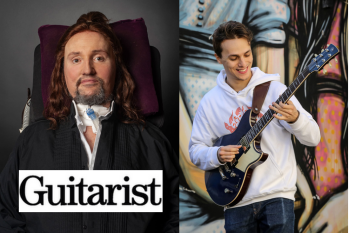
Electric guitar virtuoso Matteo Mancuso is the latest guitarist to link up with Jason Becker, with the pair sharing a moment “that beautifully bridged generations of guitar greatness”.

Becker was one of the hottest guitarists in the world in the late 1980s, having emerged alongside Marty Friedman, who would later join Megadeth, in Cacophony before joining David Lee Roth’s band for 1991’s A Little Ain’t Enough.

However, his playing days were tragically cut short after an amyotrophic lateral sclerosis (ALS) diagnosis in 1989. He lost the ability to speak in 1996 and now communicates via a computer.

That hasn’t stopped him from inspiring generations of stars, though, with Nita Strauss and 11-year-old metal star Maya Neelakantan two of the latest players to visit him and leave richer for the experience.

Mancuso, a talent heralded by Steve Vai, Al Di Meola, and Tosin Abasi, has now followed in their footsteps, and his visit left an impression on Becker.

“Each of them [the above players to have praised Mancuso’s skills] has echoed a powerful sentiment: if the future of guitar lies in Matteo’s hands, then the instrument’s legacy is in very good hands indeed,” a post on his Instagram reads.

“But what struck us most during his visit wasn’t just his technical brilliance – it was his heart. Matteo arrived with sincere humility, kindness, and a deep respect for Jason and his story. Watching the two connect – one a rising star, the other an enduring symbol of courage and creative brilliance – was moving and unforgettable.”

“It was a meeting of minds, a celebration of music, and a reminder that true greatness lies not only in talent, but in the soul behind the strings,” the post continues.

“Jason and all of Team Becker want to express their heartfelt thanks to Matteo and his manager, Michele Mozzicato, for making this visit possible – and for being so generous with their time, energy, and spirit.

“It meant the world to us. We’ll be cheering Matteo on every step of the way and can’t wait to watch his incredible journey continue to unfold. His future is as bright as his talent is undeniable.”

In the image shared with the post, Mancuso can be seen with his to-to guitar, a sunburst Yamaha Revstar, meaning, like others before him, he likely gave Becker a private showing of his talents.

Speaking of the guitarist’s talents and future, Al Di Meola – one of Mancuso’s biggest champions – said: “He’s a phenomenon. When I first heard him, I said, ‘Okay, he’s lightyears ahead.’ He’s got an extraordinary technique.”

Beyond that high praise, though, was a pointed tip for ensuring his remarkable rise continues.

“But what he doesn’t have yet,” he said, “he’s not a composer. So everything he’s playing in these videos is wow. But it’s not against any music. How is that gonna fit in the music?”

Becker’s latest single, Some Assembly Required, released last year and features a seven-minute solo session thanks to guest stars, including Steve Vai, Joe BonamassaSteve Lukather, and Zakk Wylde.

Read the Full Article

Matteo Mancuso on TKA

via San Francisco Chronicle

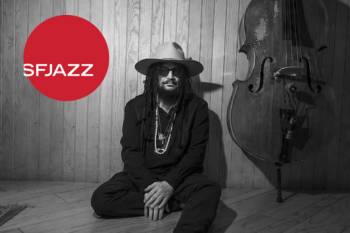
It casts no shade on Don Was’s impressive musical career to acknowledge that it wasn’t his instrumental prowess that led to his SFJazz Lifetime Achievement Award.

A founding member of the zany but hard-grooving Detroit band Was (Not Was), he’s been tearing up stages lately with the stylistically omnivorous Pan-Detroit Ensemble — when he’s not holding down the bass chair with Bob Weir and the Wolf Bros. But throughout the SFJazz Gala concert Thursday, June 12, at SFJazz Center, Was was celebrated not as a player but for his work as a producer and president of Blue Note Records, jazz’s most respected and consequential label since the late 1940s.

On a program overflowing with incandescent talent, almost every featured performer had recorded for Was at Blue Note since he took over and revitalized the label in 2012. With longtime Bay Area resident and actor Delroy Lindo serving as emcee and SFJazz Executive Artistic Director Terence Blanchard detailing the accomplishments of his longtime friend, Was was hailed for his vision of jazz as inextricably tied to a welter of kindred idioms. 

“He honors jazz without putting it in a box,” Blanchard said.

In the jazz world — so accustomed to being overlooked, misunderstood and generally neglected in popular culture — there’s a sense of gratitude for Was’s exemplary stewardship of Blue Note. Having produced dozens of albums for artists like Bob Dylan, the Rolling Stones, Van Morrison, the B-52s and Bonnie Raitt, he probably left a good deal of money on the table by devoting so much of his life to jazz.

Video testimonials offering heart-felt congratulations from Keith Richards, Ringo Star, Rosanne Cash and Raitt, who hailed him as a “big brother” opening new doors for her, emphasized the larger musical pool he swims in. 

But perhaps one of the most endearing tributes came from an unlikely collaborator, who showed up in person to razz the honoree.

Comedian and actor Paul Reiser recounted the improbably spontaneous late-night recording session that resulted in “The Final Frontier,” the theme song to his ’90s sitcom “Mad About You” — composed, arranged and produced by Was on a day’s notice. 

Though initially hesitant about the theme — which he playfully sampled for Thursday’s audience on piano — Reiser went on to explain how it became a quiet hit with an unexpected afterlife. 

“The coolest thing? NASA used it. It was the wake-up call on Mars,” he said. “It wasn’t the biggest hit on Earth, but on other planets, it’s quite significant. It was the most popular tune on the planet of Mars.”

Laughs aside, Reiser shared his main takeaway from that collaboration, which echoed the evening’s deeper celebration of Was’s ethos.

“I learned from Don, like, that’s how you should try to be — just keep saying yes. Just do it. Don’t say no, and don’t be scared of going into business.”

If Reiser’s story captured the spirit of Was’s creative generosity, the Grammy-winning producer’s own remarks revealed where that spirit was born.

During his acceptance speech, Was described how he discovered the transformative power of jazz as a cranky 14-year-old by happening upon tenor saxophonist Joe Henderson’s newly released “Mode For Joe” in the summer of 1966. 

Drawn in at first by the angst he heard in Henderson’s horn, he felt unburdened as the band started swinging fiercely, realizing “you’ve got to groove in the face of adversity,” he said. 

Whatever else he pursued, jazz remained part of his calling because it “helps listeners make sense of the confusion of the human situation.”

At a time when so many arts organizations are struggling, the gala projected confidence and a sense of mission amidst requisite appeals for support, particularly for SFJazz’s educational programs. Hailing an art form steeped in African American culture and history, SFJazz Board Chair Molly Coye described the music as a source of resistance and “a voice for freedom and beauty.”

The evening was also dedicated to Zakir Hussain, the tabla maestro who played a central role at SFJazz for decades before his death last December at 73. With SFJazz Collective members serving as the house band there wasn’t a less than riveting performance, and the highlights tended to be the quieter, more intimate moments, like a long solo introduction by Oakland trumpeter Ambrose Akinmusire that hovered in the horn’s middle register.

Vocalist Gabrielle Cavassa, a San Francisco State University grad now living in New Orleans, gave a ravishing preview of her upcoming debut album for Blue Note with an ache-filled version of the 1960s Italian pop song “La Notte Dell’Addio” (The Night of Farewell) as a duo with pianist Edward Simon. And guitarist Bill Frisell’s quintet rendering of Thelonious Monk’s sumptuous ballad “Crepescule With Nellie” with Akinmusire and tenor saxophonist Chris Potter unfurled with intensely compressed drama.

Frisell stayed on stage for Lisa Fischer’s transcendent version of the Rolling Stones 1971 hit “Wild Horses,” which garnered the evening’s first standing ovation. A sound sculptor, she was the only featured artist who hasn’t recorded for Blue Note, though she collaborated with Was on one of his albums and a Stones project.

The evening’s two themes, celebrating Was and honoring Hussain, converged at the end with a sublime set by Charles Lloyd’s Sky Quartet featuring drummer Eric Harland, which headlines opening night of the San Francisco Jazz Festival on Friday, June 13. 

Lloyd and Harland toured and recorded with Hussain in the group Sangam, and the tenor sax legend seemed to recapitulate Was’s insight as he flowed from an anguished version of Billie Holiday “Don’t Explain” into a poetic spoken word tribute to Hussain and concluded with a high-stepping carnival beat, grooving in the face of adversity.

Don Was on TKA

Read the Full Article